
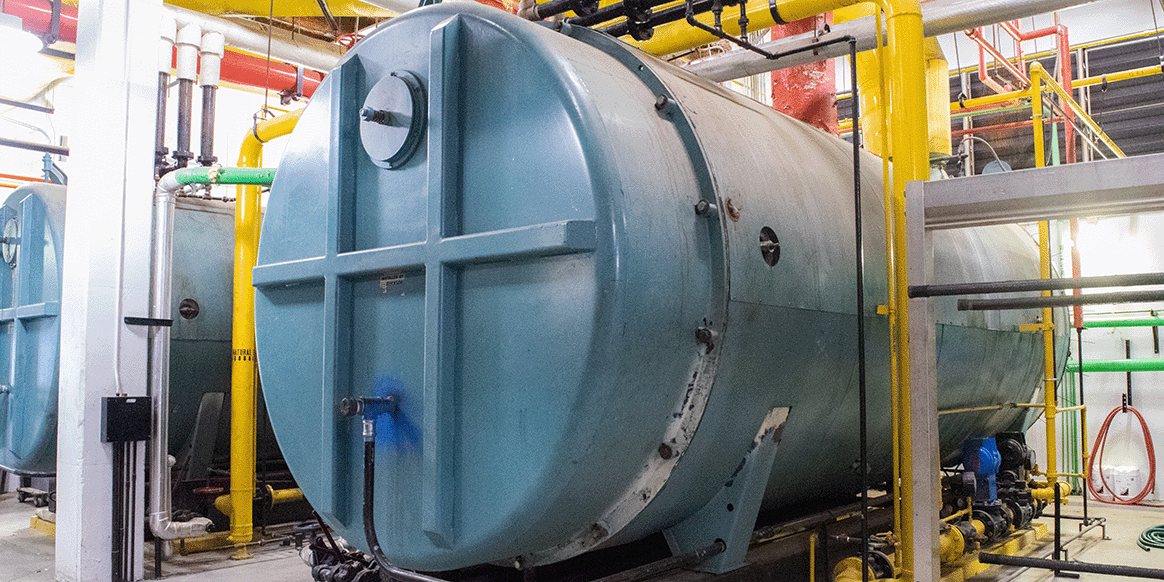
Industrial boilers in Canada are primarily classified into fire-tube and water-tube boilers, along with variations like steam boilers, hot water boilers, package boilers, and modular systems. The right boiler depends on pressure requirements, fuel type, efficiency goals, and compliance with Canadian regulations such as ASME standards and provincial authorities like TSSA in Ontario.
Why Industrial Boilers Matter in Canadian Industries
Industrial boilers power critical operations across manufacturing, food processing, energy, and commercial facilities. They generate steam or hot water used for heating, sterilization, processing, and energy production.
In Canada, boiler selection must also meet strict safety and compliance standards set by:
- Ontario Building Code (OBC)
- Technical Standards and Safety Authority (TSSA)
- ASME Boiler and Pressure Vessel Code
Choosing the right boiler directly impacts efficiency, operating cost, and regulatory compliance.
Understanding Industrial Boilers: What They Are and How They Work
An industrial boiler, at its most fundamental level, is a sophisticated piece of equipment designed to generate and control the release of thermal energy. Its primary function is to heat water within a closed system, producing either steam or hot water under pressure. This heated fluid then serves a multitude of purposes across various industrial sectors.
The Core Process: Heating Water with Combustion
The process begins with the combustion of a fuel source. In Canada, common fuels include natural gas, oil, propane, and increasingly, biomass or even electricity. This fuel is burned in a combustion chamber, generating high-temperature gases. These hot gases are then directed through or around a system of tubes containing the water to be heated.
- Heat Transfer: The crucial step is the efficient transfer of heat from the combustion gases to the water. The design of the boiler dictates how this transfer occurs, influencing pressure, temperature, and the volume of steam or hot water produced.
- Pressure Build-up: As water heats up, it expands and eventually vaporizes into steam. The enclosed nature of the boiler allows pressure to build, making the steam a potent source of thermal energy that can be utilized for heating, driving turbines, or powering various industrial processes.
The efficiency and capacity of a boiler are determined by its design, the type of fuel used, and the engineering of its heat transfer surfaces. Understanding these basics is the first step in appreciating the differences between the various industrial boiler types available to Canadian industries.
The Two Main Types of Industrial Boilers
In Canada’s diverse industrial landscape, two primary classifications of boilers have stood the test of time: fire-tube boilers and water-tube boilers. Understanding the distinctions between these types is crucial for selecting the right equipment for your specific needs.
Fire-Tube Boilers
In a fire-tube boiler, the hot combustion gases produced by burning fuel pass through tubes that are surrounded by water. The heat from these gases is then transferred through the tube walls to the water, generating steam or hot water.
- How They Work: Fuel is burned in a combustion chamber, creating hot flue gases. These gases travel through a set of tubes that are submerged in water within the boiler shell. Heat is transferred from the gases to the water, causing it to boil and produce steam.
- Typical Applications: Fire-tube boilers are generally best suited for applications requiring lower pressure steam (typically up to 15-20 psi) and lower capacities. They are commonly used for:
- Industrial heating systems
- Sterilization processes
- Small-scale process steam applications
- General building heating
- Pros:
- Simpler Design: They have a more straightforward construction.
- Lower Initial Cost: Generally less expensive to purchase and install compared to water-tube boilers of similar capacity.
- Easier Maintenance: Simpler design often translates to easier and less costly maintenance.
- Compact: Can be more compact for their capacity range.
- Cons:
- Limited Pressure and Capacity: Not ideal for high-pressure or high-capacity steam generation.
- Slower Steam Production: Can take longer to generate steam compared to water-tube boilers.
- Lower Thermal Efficiency at High Loads: Efficiency can decrease significantly at higher operating pressures.
- Keywords: fire-tube boiler types, how fire-tube boilers work, industrial fire-tube boiler applications, scotch marine boiler, package fire-tube boiler, low pressure steam boiler.
Water-Tube Boilers Explained
In contrast, water-tube boilers are designed so that the water being heated circulates through tubes, while the hot combustion gases surround these tubes. This design allows for higher pressures and greater capacities.
- How They Work: Fuel is burned in a furnace, and the hot gases rise to heat the water circulating through a network of tubes that make up the boiler’s heating surface. This design offers a larger heating surface area relative to the volume of water.
- Typical Applications: Water-tube boilers are the workhorses for applications requiring high-pressure steam, large capacities, and higher thermal efficiency. They are essential for:
- Power generation (including co-generation)
- Large-scale industrial processes requiring high-pressure steam
- Refineries and chemical plants
- District heating systems
- Pros:
- High Pressure and Capacity: Capable of generating high-pressure steam efficiently.
- Higher Thermal Efficiency: Generally more efficient, especially at higher operating pressures.
- Faster Steam Production: Can generate steam more quickly.
- Greater Safety at High Pressures: The design inherently handles high pressures more safely, as the volume of water at high pressure is smaller.
- Cons:
- More Complex Design: Involves more intricate construction and components.
- Higher Initial Cost: Typically more expensive to purchase and install.
- More Complex Maintenance: Requires specialized knowledge and more frequent inspections.
- Keywords: water-tube boiler types, how water-tube boilers work, industrial water-tube boiler applications, high pressure steam boiler, D-type boiler, A-type boiler, power plant boiler.
Other Important Industrial Boiler Types
Steam Boilers
Used to generate steam for:
- Manufacturing processes
- Food sterilization
- Chemical production
- Power generation
Hot Water Boilers
Used for:
- Facility heating
- Hydronic systems
- Industrial washdown processes
Package Boilers
Pre-assembled units delivered ready for installation.
Best for:
- Fast deployment
- Space-constrained facilities
- Lower installation complexity
Modular Boilers
Multiple smaller boilers working together.
Benefits:
- Scalable output
- Energy efficiency
- Redundancy for reliability
Factors to Consider When Selecting an Industrial Boiler in Canada
Choosing the right industrial boiler is a significant investment that impacts your facility’s operational efficiency, energy costs, and compliance. For Canadian businesses, several factors are critical, from basic operational needs to the unique regulatory and environmental landscape of Canada.
Steam vs. Hot Water Needs
The first decision hinges on your primary requirement:
- Steam Boilers: If your process requires high temperatures for heating, sterilization, driving turbines, or powering machinery, a steam boiler is necessary. Steam is an efficient medium for transferring large amounts of heat.
- Hot Water Boilers: For space heating, certain process applications, or where lower operating temperatures are sufficient, a hot water boiler is more appropriate. Hot water systems are often simpler and may operate at lower pressures.
Capacity and Pressure Requirements
Accurately determining your peak demand is crucial for selecting a boiler with adequate capacity.
- Capacity: Measured in pounds per hour (lb/hr) for steam or BTU/hr for hot water, your boiler must be able to meet your maximum simultaneous demand. Undersizing leads to insufficient output, while oversizing results in inefficiency and higher capital costs.
- Pressure: Industrial processes require different steam pressures. Boilers are rated for specific maximum operating pressures. Ensure the boiler meets or exceeds your highest required pressure, considering potential future expansion.
Fuel Availability and Type
Canada’s diverse geography means fuel availability varies significantly. The choice of fuel impacts operating costs, emissions, and boiler design.
- Natural Gas: Widely available in many industrial regions of Canada, it’s often the most cost-effective and cleanest burning fossil fuel.
- Oil (Light/Heavy): A common alternative where natural gas is unavailable, though it typically has higher emissions and storage requirements.
- Propane: Used in areas without natural gas infrastructure.
- Biomass: Increasingly popular for its renewability and potential cost savings, especially in regions with abundant forestry or agricultural by-products. Requires specialized boilers and handling systems.
- Electric: Often used for smaller applications or in areas where electricity is abundant and cost-effective. Less common for large industrial needs due to high operating costs.
Energy Efficiency and Emissions
With rising energy costs and a focus on sustainability in Canada, boiler efficiency is a major consideration.
- High-Efficiency Models: Modern boilers incorporate advanced burner designs, improved heat transfer surfaces, and sophisticated controls to maximize fuel utilization and minimize energy waste. Look for high Annual Fuel Utilization Efficiency (AFUE) ratings.
- Emissions Control: Canadian environmental regulations are becoming stricter. Consider boilers equipped with low NOx burners and other emissions control technologies to meet provincial and federal standards, especially in areas like the Greater Toronto Area (GTA) or other urban industrial centers.
Space and Installation Considerations
The physical footprint of the boiler and its associated equipment is important.
- Boiler Room Design: Ensure adequate space for the boiler, burner, auxiliary equipment, ventilation, fuel supply, and safe access for operation and maintenance.
- Installation Requirements: Consider ventilation needs, flue gas discharge, water treatment, and electrical connections specific to the boiler type and your facility.
Canadian Regulations and Compliance
Operating an industrial boiler in Canada is heavily regulated to ensure safety and environmental protection.
- ASME Codes: Most boilers must be designed, fabricated, and installed in accordance with the ASME Boiler and Pressure Vessel Code. This ensures adherence to safety standards.
- Provincial Regulations: Each province has its own regulatory bodies (e.g., Technical Standards and Safety Authority (TSSA) in Ontario, Alberta Boilers Safety Association (ABSA)) that govern boiler installation, operation, inspection, and licensing of boiler operators. Ensure your chosen boiler and installation plan comply with all applicable provincial codes and regulations.
Common Applications of Industrial Boilers in Canada
Industrial boilers are versatile pieces of equipment that support a wide array of processes across Canada’s key economic sectors. Their ability to reliably generate thermal energy makes them indispensable for operations ranging from basic heating to complex manufacturing.
Manufacturing & Processing
This sector is a primary user of industrial boilers.
- Process Heat: Boilers supply steam or hot water for heating vats, drying materials, pasteurization, and countless other manufacturing steps in industries like textiles, paper production, and metal fabrication.
- Power Generation: Many manufacturing plants utilize boilers for co-generation, producing both electricity and process steam, significantly improving energy efficiency.
Food & Beverage
The food and beverage industry relies heavily on steam for various applications.
- Sterilization & Pasteurization: Steam is critical for sterilizing equipment and pasteurizing products like milk, juices, and canned goods.
- Cooking & Baking: Boilers provide steam for ovens, cookers, and processing vats.
- Building Heating: Maintaining specific ambient temperatures in production and storage areas.
Petroleum & Chemical
The high temperatures and pressures required in these industries often necessitate robust water-tube boilers.
- Process Heating: Steam is used extensively for heating reactors, distillation columns, and various chemical processes.
- Power Generation: Large-scale refineries and chemical plants often have their own power generation capabilities using industrial boilers.
District Heating
In urban centers and large industrial complexes, boilers are used to heat entire districts or campuses.
- Community Heating: Large boilers supply hot water or steam through underground pipes to multiple buildings, providing efficient and centralized heating. This is becoming increasingly relevant in sustainable urban planning in Canadian cities.
Power Generation
For electricity production, especially in industrial settings or co-generation plants, large, high-pressure water-tube boilers are essential.
- Steam Turbines: Boilers generate high-pressure steam that drives turbines connected to generators, producing electricity.
Why Proper Installation and Maintenance Matters
Even the best boiler fails without proper installation and servicing.
Key risks of poor installation:
- Efficiency loss
- Pressure issues
- Safety hazards
- Regulatory violations
Routine maintenance includes:
- Burner inspection
- Pressure testing
- Scale removal
- Safety valve checks
Finally,
Selecting the right industrial boiler is not just about capacity. It is about safety, compliance, and long-term efficiency.
Select Plumbing and Heating provides industrial boiler installation, repair, and maintenance inToronto and Mississauga and Ontario. Contact our team to ensure your system meets all regulatory and performance standards.
Q1: What are the main types of industrial boilers?
The main types are fire-tube boilers and water-tube boilers, along with steam, hot water, package, and modular systems.
Q2: Which boiler is best for high-pressure industrial use?
Water-tube boilers are best suited for high-pressure and high-capacity applications.
Q3: Are industrial boilers regulated in Ontario?
Yes. Boilers must comply with TSSA regulations, ASME standards, and provincial safety requirements.
Q4: What fuel is commonly used for industrial boilers in Canada?
Natural gas is the most common, followed by propane, oil, biomass, and electric systems.
References
Ontario Building Code – Plumbing (Part 7)
TSSA Boilers and Pressure Vessels Overview
TSSA Certification and Compliance Requirements
Global standard referenced in Canada ASME Boiler and Pressure Vessel Code Overview
Canadian Institute of Plumbing and Heating (CIPH)
