
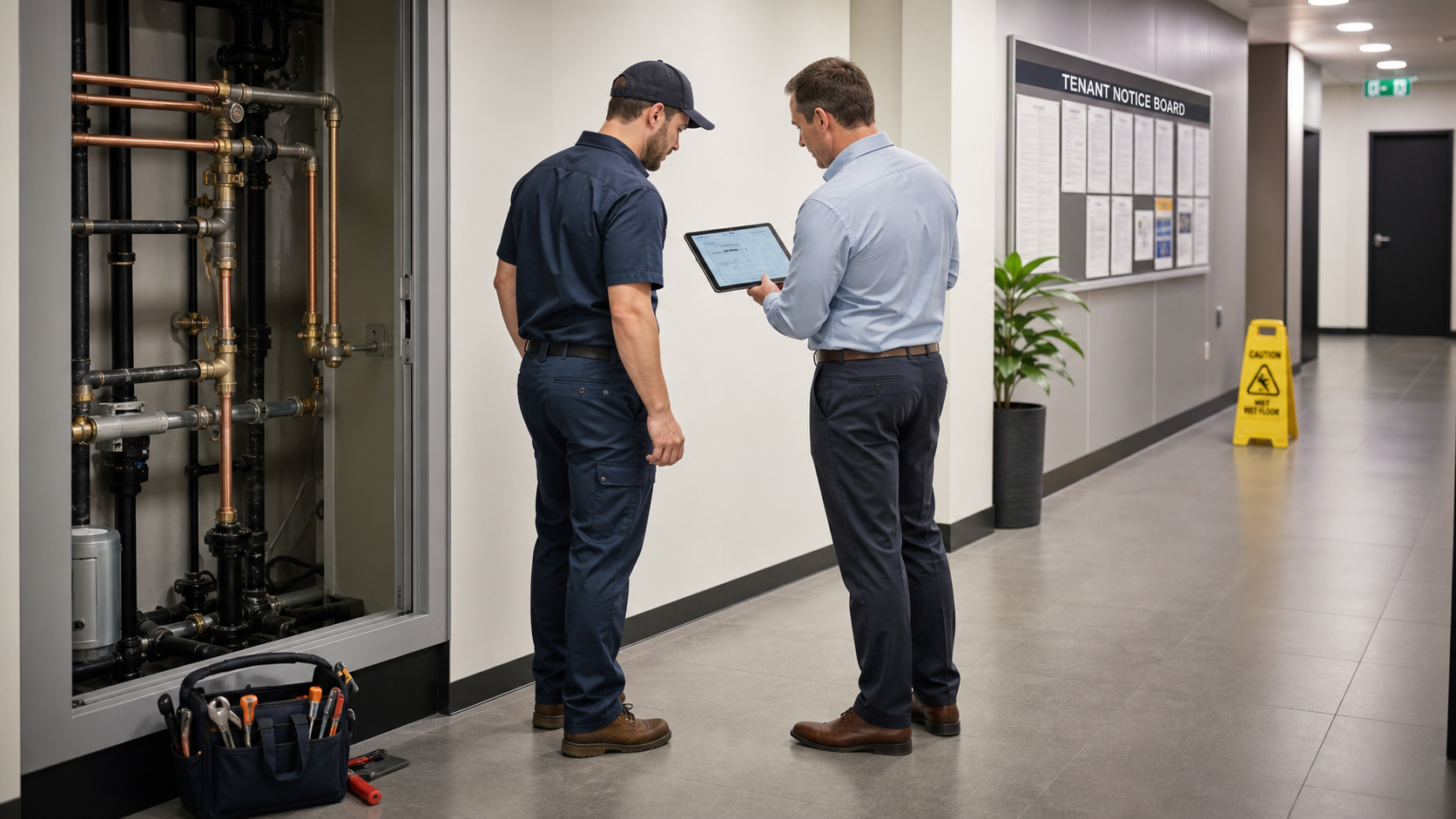
Plumbing repairs in a tenant-occupied commercial building are rarely just a technical job. A leak, drain repair, valve replacement, water shutdown, backflow repair, or mechanical-room issue can affect washrooms, food service, clinics, offices, retail units, loading areas, inventory, staff routines, and customer experience. That is why I treat tenant disruption as part of the repair plan from the beginning.
The repair still has to be done properly, but the experience around the repair matters too. Clear notice, access planning, containment, realistic timing, and a clean restoration process can prevent a necessary plumbing job from becoming a property-management headache.
Call 905-501-5501 or 1-888-501-5501 today to request industrial plumbing in Mississauga and Toronto.
Start By Mapping Who Will Be Affected
The first step is to identify exactly which tenants, fixtures, systems, and shared areas may be affected. A repair near a riser, washroom group, floor drain, backflow assembly, water meter, boiler room, or drain line may affect more than the unit where the issue was first reported.
This is where earlier inspection records help. If the building has known pressure issues, recurring drain complaints, leaking valves, or older piping, those details should shape the repair plan. A recent pipe inspection for commercial properties can make the scope clearer before tenants are notified.
Give Tenants Specific Notice, Not Generic Notice
A useful tenant notice should explain the repair date, expected start time, estimated completion window, affected services, access needs, and the best contact person. Tenants do not need a long technical explanation, but they do need enough detail to plan around the disruption.
The notice should be different for different tenant types. A restaurant may care about dishwashing, washrooms, grease handling, and prep time. A clinic may care about patient appointments and handwashing. A warehouse may care about shipping schedules, floor drains, loading areas, or equipment. A generic notice does not answer those practical questions.
Schedule Around The Building’s Real Operating Rhythm
Commercial buildings have patterns. Some tenants open early, some receive deliveries mid-day, some clean after hours, and some need water or drainage at very specific times. The lowest-disruption repair window is not always the earliest available contractor slot. It is the window that fits the building’s actual operations.
For bigger repairs, this overlaps with proper commercial plumbing shutdown planning. If water must be isolated, valves tested, or systems restored before reopening, the schedule should include setup, repair, testing, cleanup, and a buffer for surprises.
Plan Access Before The Technician Arrives
Access delays are one of the easiest ways to frustrate tenants. Before the repair window, confirm keys, escorts, security procedures, parking, loading access, ceiling access, roof access if needed, utility-room access, and any tenant-specific restrictions. If the contractor needs to enter a leased unit, the tenant should know who is coming and why.
Mechanical-room access should also be confirmed early. The mechanical room plumbing checklist is a useful reference when the work involves valves, pumps, gauges, backflow assemblies, drains, boilers, or hydronic equipment.
Contain The Work Area Like It Matters
Containment is not just about looking tidy. It protects flooring, ceilings, tenant inventory, displays, files, equipment, and customer-facing areas. The plan should consider floor protection, water containment, dust control if openings are needed, tool staging, safe walkways, and cleanup expectations before work starts.
For drain-related repairs, containment can be especially important because odour, wastewater, or debris can affect nearby tenants quickly. If a building has recurring drain complaints, a drain and sewer camera inspection may help confirm whether the repair is local or part of a larger drainage issue.

Keep Safety And Isolation Practical
If the work involves pressure, stored heat, moving equipment, pumps, electrical controls, or mechanical systems, the repair plan should include safe isolation and restart steps. The Canadian Centre for Occupational Health and Safety explains hazardous energy control as a way to prevent unexpected release of energy during work. In a plumbing context, that can include pressure, heat, powered equipment, or connected mechanical systems.
This is also where backflow assemblies, water meters, pumps, boilers, and valves need proper coordination. If a repair affects a backflow device or related records, the article on cross-connection control records explains what property managers should keep on file.
Restore Service Before Calling The Job Finished
From a tenant’s perspective, the repair is not finished when the tool bag is packed. The affected fixtures, drains, valves, pressure, hot water, pumps, or backflow-related components still need to be checked. If water was shut off, the system should be restored gradually and tested where the disruption occurred.
For restaurants, clinics, retail plazas, and multi-tenant offices, I would also confirm whether washrooms, sinks, floor drains, hot water, and tenant-specific fixtures are back to normal. If a tenant had to adjust operations during the repair, the closeout should include a simple update that the service has been restored.
Use The Repair To Improve Future Response
Every commercial plumbing repair should leave the property manager with better information than before. Record what failed, what was repaired, which tenants were affected, which valves were used, what access problems came up, and whether follow-up work is recommended.
This is especially useful for buildings with repeated service calls. A pattern of drain backups, low water pressure, leaking valves, or pump issues can point toward broader maintenance needs. Related resources include commercial plumbing inspection benefits, industrial pump repair, and industrial piping maintenance checks.
Tenant-Friendly Plumbing Repair Checklist
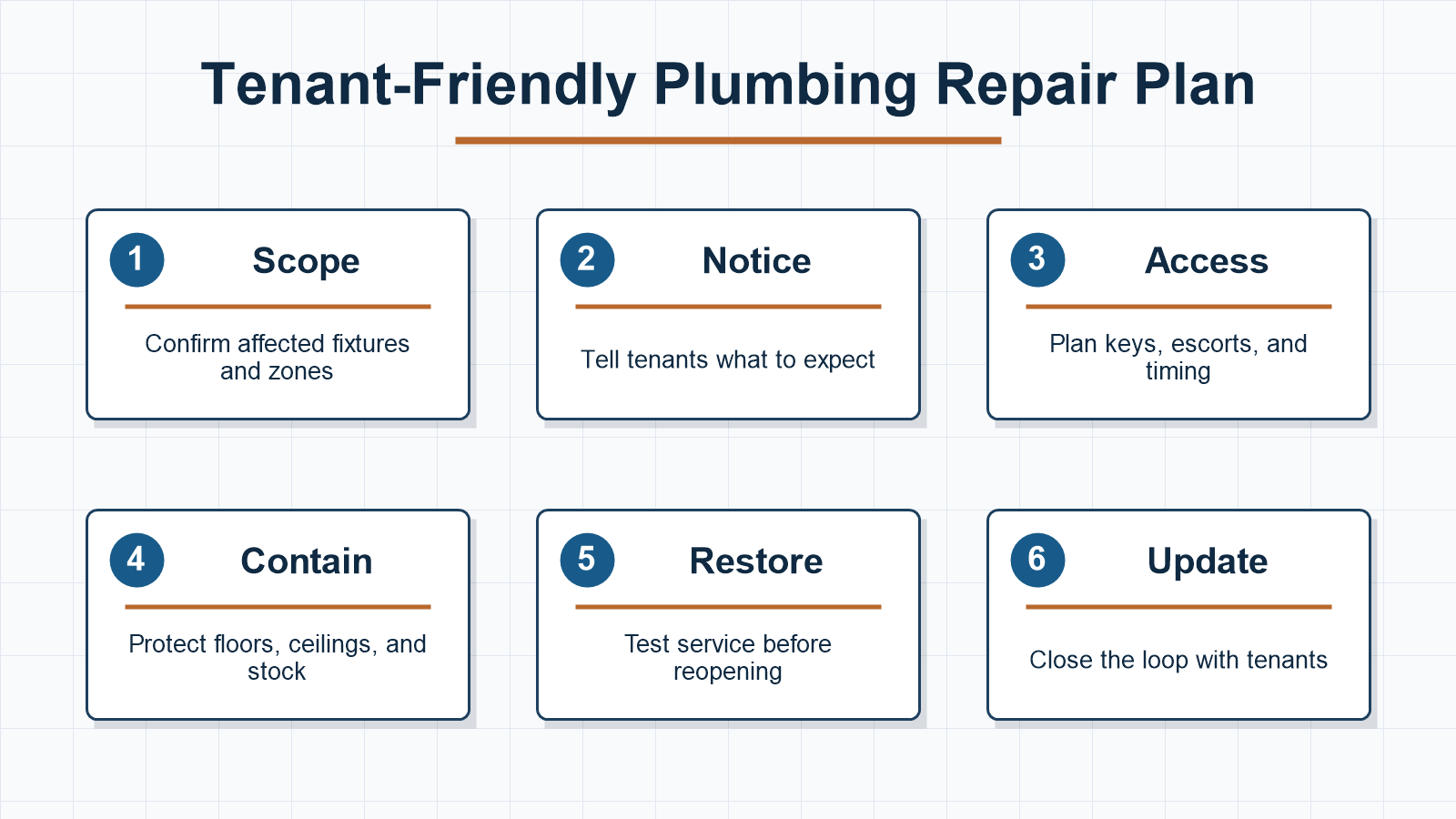
- Confirm the repair scope and affected tenant areas.
- Identify whether water, drainage, hot water, pumps, backflow, or mechanical systems are involved.
- Send a specific tenant notice with timing, impact, and contact details.
- Plan keys, escorts, parking, security, and access before the repair window.
- Protect floors, ceilings, inventory, displays, and customer-facing areas.
- Coordinate safe isolation, lockout expectations, and restart steps where needed.
- Test affected fixtures, drains, pressure, and equipment before reopening service.
- Send a closeout update to affected tenants.
- Document what was repaired and what follow-up work is recommended.
When To Bring In A Commercial Plumbing Contractor
A tenant-sensitive repair should involve a commercial plumbing contractor when the work affects multiple tenants, shared washrooms, restaurants, clinics, drains, water service, mechanical rooms, backflow devices, pumps, or after-hours access. The value is not only the repair itself. It is the coordination that keeps the building functional while the repair is completed.
Select Plumbing & Heating works with commercial and industrial properties across Mississauga and the GTA. If a repair could disrupt tenants or business operations, planning the scope, access, shutdown, containment, and restoration before work begins can make the difference between a smooth repair and a building-wide complaint cycle.
Useful External References
- CCOHS: Hazardous energy control programs
- Ontario Regulation 332/12: Building Code
- City of Mississauga: Building permits
FAQ
How much notice should tenants get before plumbing repairs?
For planned repairs, tenants should receive notice as early as practical, with timing, affected services, access requirements, and contact details. More notice is usually needed when water, drainage, washrooms, kitchens, clinics, or business operations will be affected.
Can commercial plumbing repairs be done after hours?
Yes, many commercial plumbing repairs can be scheduled after hours. The building still needs access coordination, safe isolation, enough repair time, restoration testing, and a contact person who can make decisions if conditions change.
What should property managers document after a repair?
Document the issue, affected tenants, valves or systems used, parts replaced, repair date, photos, technician notes, restoration checks, and recommended follow-up. This makes the next repair or inspection easier to plan.
