

Common industrial drainage problems include clogged floor drains, grease and debris buildup, collapsed or corroded drain lines, improper slope, and overloaded wastewater systems. These issues disrupt operations, create safety hazards, and often violate Ontario sewer bylaws.
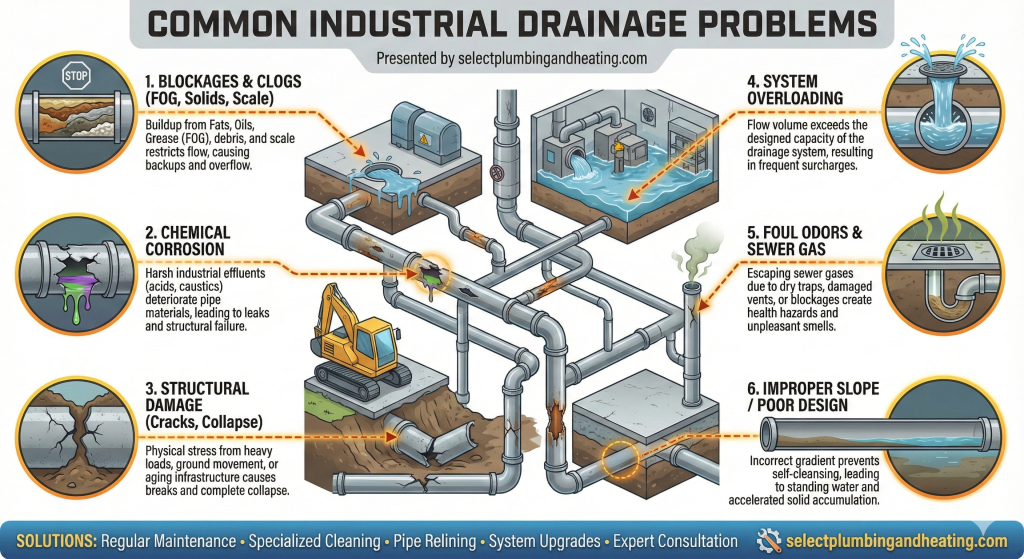
Why Industrial Drainage Fails
Industrial facilities handle higher volumes of water, chemicals, oils, and solids. Over time these loads overwhelm drains, interceptors, and main sewer lines.
(Reference: Peel Region Sewer Use By-law 53-2019 and Toronto Chapter 681 Sewer Use)
1. Clogged Floor Drains
Floor drains in warehouses, factories, food processing plants, and garages commonly clog due to:
- Sediment
- Packaging materials
- Food waste
- Oils and grease
- Concrete dust
Clogged drains stop production areas, create slip hazards, and lead to pooling wastewater.
2. Grease, Oil, and Organic Buildup
Facilities with food processing, mechanical work, or machinery cleaning deal with heavy grease loads.
Without ongoing maintenance, buildup causes:
- Slow drains
- Odours
- Blocked main sewer lines
- Grease interceptor overflow
Municipal inspectors often check for this during compliance inspections.
3. Improper Drain Slope
Drain pipes must follow slope standards set in the Ontario Building Code.
Industrial drainage issues appear when the slope is:
- Too flat, causing standing water
- Too steep, causing solids to settle rather than travel
Improper slope often occurs after renovations or machinery relocations.
4. Corroded or Collapsed Drain Lines
Industrial wastewater can be corrosive, especially when chemicals or acids are involved.
Over time this leads to:
- Pipe wall thinning
- Cracks
- Full collapse of buried drains
Older facilities with cast iron or clay pipes face higher risk.
5. Overloaded Wastewater Systems
Industrial processes sometimes push more flow than the system was designed for.
This results in:
- Backups into floor drains
- Flooding in processing areas
- Pressure on sump and ejector pumps
Flow overload is common in plants that expand production without upgrading plumbing infrastructure.
6. Poor Interceptor or Separator Maintenance
Industries using grease traps, oil separators, or sediment interceptors face problems when maintenance is delayed.
Typical failures include:
- Full traps causing backups
- Overflow of contaminants
- Fines for violating sewer bylaws
7. Inadequate Venting
Blocked or undersized vents reduce air movement inside drainage lines.
This leads to:
- Slow drainage
- Gurgling sounds
- Trap seal loss
- Odour migration into work areas
Industrial venting failures often appear in multi-level facilities.
Final Note
Industrial drainage problems grow worse when unnoticed. Routine inspections, hydro jetting, interceptor cleaning, and camera work help prevent downtime and fines.
👉 For industrial drainage diagnostics and maintenance across the GTA, contact Select Plumbing and Heating.
Q1: What causes industrial floor drains to clog?
Sediment, packaging waste, oils, and concrete dust commonly block floor drains in industrial facilities.
Q2: Why do industrial grease traps overflow?
Lack of regular cleaning allows grease and solids to build up until the interceptor fails.
Q3: How do I know if industrial drain pipes are collapsed?
Frequent backups, slow drainage, and camera inspections revealing cracks or sagging sections are key indicators.
Q4: What is the best way to maintain industrial drainage systems?
Hydro jetting, routine cleaning of interceptors, and annual camera inspections help prevent major failures.
