
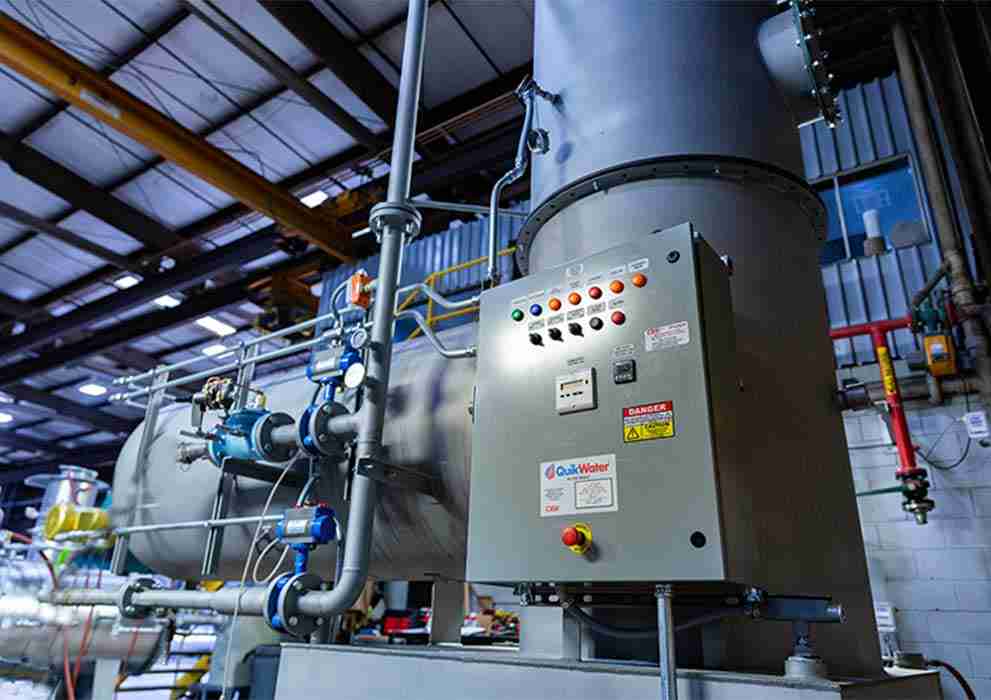
Industrial water heaters in Canada include tank, tankless, indirect, and heat pump systems. The right system depends on demand, fuel type, efficiency goals, and compliance with Canadian regulations such as the Ontario Building Code and TSSA. Proper selection ensures reliable hot water supply for industrial processes, sanitation, and facility operations.
Why Industrial Water Heaters Matter in Canadian Industries
Industrial water heaters provide consistent hot water for operations across manufacturing, food processing, commercial facilities, and institutional buildings. They support cleaning, sanitation, process heating, and occupant comfort.
In Canada, water heating systems must comply with:
- Ontario Building Code (OBC)
- Technical Standards and Safety Authority (TSSA)
- CSA and ASME standards for pressure equipment
These requirements ensure safe operation, energy efficiency, and environmental compliance.
Understanding Industrial Water Heaters: What They Are and How They Work
An industrial water heater is designed to heat and store or instantly deliver hot water for high-demand applications. Unlike residential systems, these units handle larger volumes, higher recovery rates, and continuous usage.
The Core Process: Heating Water Efficiently
Water heaters use a fuel source or electricity to generate heat, which is transferred to water through heat exchangers or heating elements.
- Heat Transfer: Energy is transferred from burners or electric elements to water
- Temperature Control: Systems regulate output temperature based on demand
- Continuous Supply: Industrial systems are designed for high flow and minimal downtime
Efficiency depends on system design, fuel type, and usage patterns.
The Main Types of Industrial Water Heaters
Tank Water Heaters
Store heated water in a large insulated tank.
How They Work:
Water is heated and stored until needed, then replenished as it is used.
Typical Applications:
- Commercial buildings
- Food processing
- Institutional facilities
Pros:
- Reliable supply
- Lower upfront cost
- Simple installation
Cons:
- Limited storage capacity
- Heat loss over time
- Slower recovery compared to tankless
Tankless Water Heaters
Heat water on demand without storage.
How They Work:
Water passes through a heat exchanger and is heated instantly.
Typical Applications:
- High-demand continuous usage
- Industrial cleaning processes
- Space-limited facilities
Pros:
- Energy efficient
- Unlimited hot water
- Compact design
Cons:
- Higher upfront cost
- Requires proper sizing for demand
Indirect Water Heaters
Use an external boiler as the heat source.
How They Work:
Hot water from a boiler transfers heat through a coil inside a storage tank.
Typical Applications:
- Facilities with existing boiler systems
- Manufacturing plants
- Large commercial buildings
Pros:
- High efficiency
- Uses existing infrastructure
- Long lifespan
Cons:
- Dependent on boiler performance
Heat Pump Water Heaters
Use ambient air to heat water.
How They Work:
Extract heat from surrounding air and transfer it to water.
Typical Applications:
- Energy-efficient facilities
- Warehouses
- Low-emission buildings
Pros:
- Very high efficiency
- Lower operating cost
- Reduced emissions
Cons:
- Performance depends on ambient temperature
- Higher upfront cost
Factors to Consider When Selecting an Industrial Water Heater in Canada
Hot Water Demand and Usage Patterns
Determine peak usage and continuous demand requirements.
Undersized systems fail during peak load. Oversized systems waste energy.
Fuel Type Availability
Common options in Canada:
- Natural gas
- Propane
- Electricity
- Hybrid systems
Fuel choice impacts operating cost and emissions.
Energy Efficiency and Operating Cost
Modern systems focus on:
- High recovery rates
- Reduced standby losses
- Energy efficiency compliance under Natural Resources Canada
Space and Installation Requirements
Consider:
- Equipment footprint
- Ventilation
- Drainage
- Access for maintenance
Canadian Regulations and Compliance
Industrial water heating systems must follow:
- Ontario Building Code requirements
- TSSA certification for pressure equipment
- CSA standards for gas and electric appliances
Failure to comply can lead to safety risks and operational shutdowns.
Common Applications of Industrial Water Heaters in Canada
Manufacturing and Processing
Used for cleaning, equipment washdown, and process heating.
Food and Beverage Industry
Supports sanitation, sterilization, and hygiene compliance.
Commercial and Institutional Buildings
Used in hospitals, hotels, schools, and office buildings.
Industrial Cleaning Operations
High-temperature water is critical for removing grease, oil, and contaminants.
Why Proper Installation and Maintenance Matters
Improper installation leads to:
- Reduced efficiency
- Temperature inconsistency
- Safety risks
- Compliance issues
Routine maintenance includes:
- Burner or element inspection
- Tank flushing
- Scale removal
- Temperature calibration
Final Note
Selecting the right industrial water heater is critical for performance, safety, and compliance.
👉 Select Plumbing and Heating provides industrial hot water heater installation & repair in Mississauga, Toronto and Ontario. Contact our team to ensure your system is efficient, compliant, and built for long-term reliability.
FAQ Targets
Q1: What types of industrial water heaters are used in Canada?
Tank, tankless, indirect, and heat pump systems are the most common.
Q2: Which industrial water heater is most energy efficient?
Heat pump and tankless systems are generally the most energy efficient options.
Q3: Are industrial water heaters regulated in Ontario?
Yes. They must comply with Ontario Building Code, TSSA, and CSA standards.
Q4: What fuel is best for industrial water heaters in Canada?
Natural gas is most common, but electric and hybrid systems are also widely used.
Research-Based Citations for Industrial Water Heaters and Canadian Compliance
| # | Citation | Key Focus |
|---|---|---|
| 1 | Rowley, P. F. (2025). Benefits of Tankless Water Heaters for Large Capacity Applications. | Peer-reviewed study in ASHRAE Transactions analyzing the energy consumption and greenhouse gas (GHG) emission reductions of industrial-scale tankless water heaters compared to traditional storage systems. |
| 2 | Eizadi-Tolesorkhi, M., & Goudarzi, K. (2026). Thermo-hydraulic and entropy-based optimization of heat exchangers in tankless gas water heaters. | 2026 research in Energy and Buildings investigating the pathways to energy efficiency and economic sustainability in high-demand commercial and industrial gas water heating systems. |
| 3 | TSSA (2025). Boilers and Pressure Vessels Code Adoption Document (CAD) Amendment. | Official 2025 regulatory document from the Technical Standards and Safety Authority (TSSA) outlining the mandatory safety standards and inspection requirements for industrial pressure equipment in Ontario. |
| 4 | Clean Stream Plumbing (2025). Ontario Plumbing Code 2025: A Complete Guide for Industrial Compliance. | Technical guide detailing the 2025 updates to the Ontario Building Code and Plumbing Code, specifically focusing on new efficiency and safety requirements for industrial water heating installations. |
| 5 | Rheem Manufacturing (2025). Heat Pump vs. Electric Tankless Water Heaters: Long-Term Efficiency in Cold Climates. | Technical analysis of the performance of heat pump water heaters in cold climates like Canada, demonstrating up to 60% energy savings compared to conventional electric systems. |
| 6 | Natural Resources Canada (2024). Energy Efficiency Standards for Commercial and Industrial Water Heaters. | Official federal guidelines from NRCan specifying the minimum energy performance standards (MEPS) for commercial and industrial water heating equipment sold in Canada. |
| 7 | Alberti, T., et al. (2025). Technical Trends and Economics of Sustainable Industrial-Scale Electric Heating. | Research in Sustainability examining the shift toward industrial-scale electric and heat pump systems as a means of achieving decarbonization and water savings in manufacturing processes. |
| 8 | Willem, H., et al. (2017). Review of energy efficiency and system performance of residential and commercial heat pump water heaters. | Comprehensive review in Energy and Buildings of the system performance and energy conservation standards for heat pump technologies in large-scale applications. |
l
