
Last Updated on July 2, 2026
For a commercial building, a plumbing shutdown should never feel improvised. In a Mississauga facility, one closed valve can affect tenants, washrooms, production areas, food service, mechanical equipment, fire-protection coordination, or after-hours access. That is why I look at shutdown planning as a risk-control process, not just a plumbing task.
A good shutdown plan answers five practical questions before anyone touches the system: what is being isolated, who will be affected, how long the outage will last, what equipment needs protection, and how the system will be restored. When those answers are clear, the work is usually cleaner, faster, and less disruptive for the people inside the building.
Start With The Exact Scope Of Work
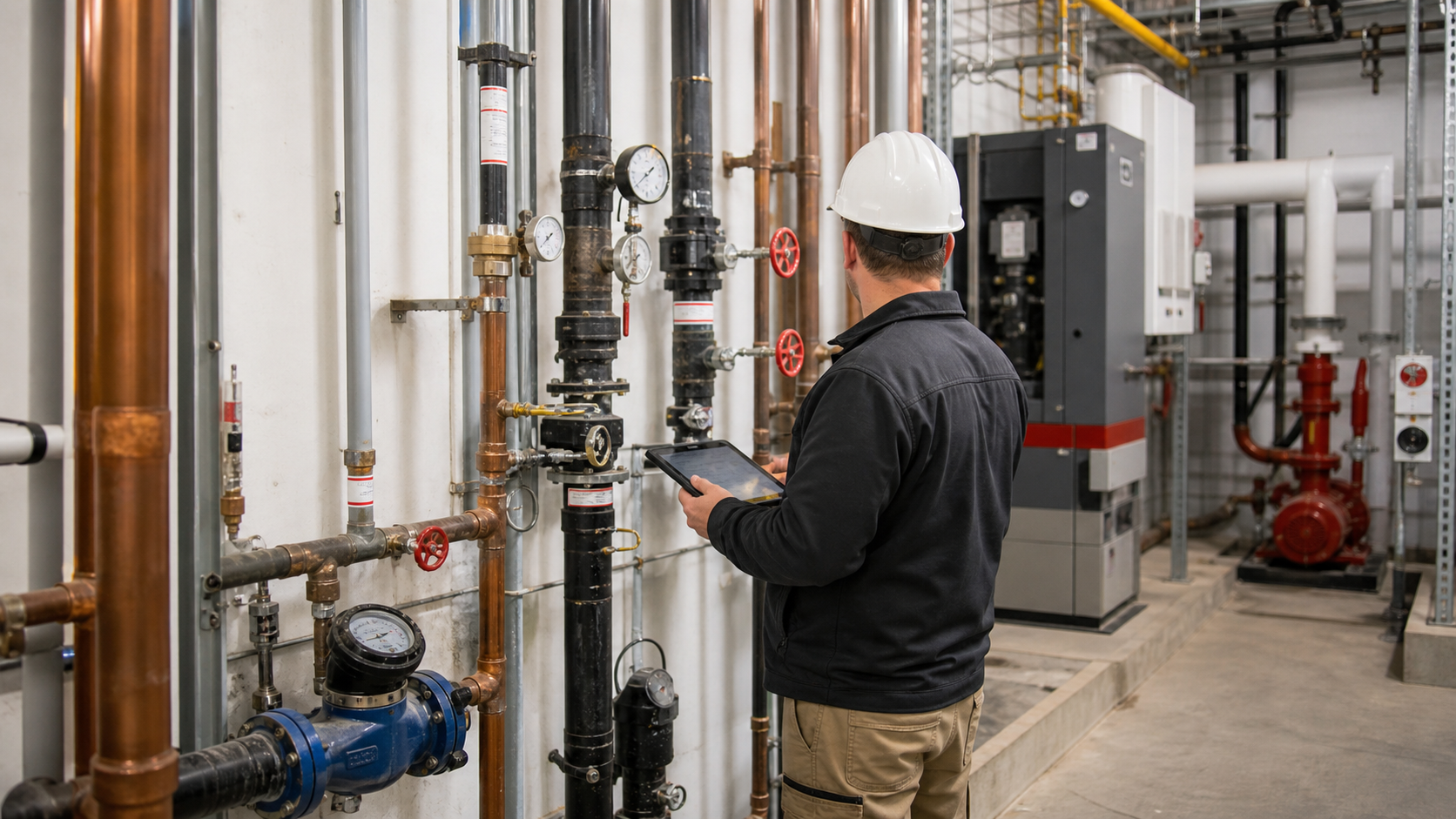
The first step is to define the work area and the system being affected. A repair on a domestic water line is different from work near a backflow preventer, hydronic loop, booster pump, grease interceptor, or mechanical-room piping. The plan should identify the valves, drains, fixtures, equipment, and service zones involved before scheduling begins.
For property managers, this is where drawings, previous inspection notes, and the building’s own maintenance records matter. If the building has had recurring leaks, pressure issues, blocked drains, or fixture complaints, those details should be reviewed before the shutdown window is confirmed. A recent commercial pipe inspection can make this part much easier because it gives the team a clearer picture of known weak points.
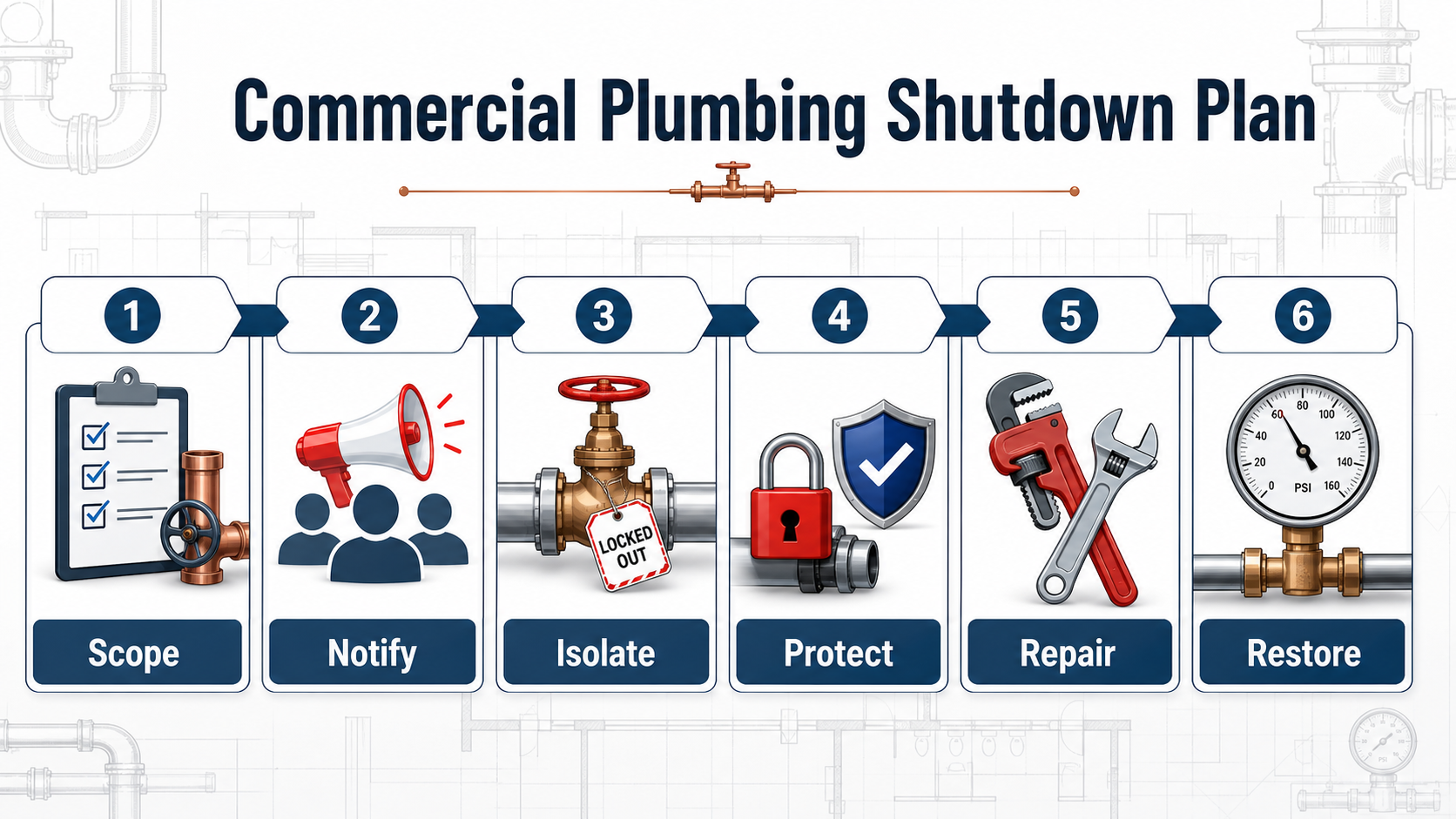
Notify Tenants, Staff, And Affected Areas Early
Most commercial plumbing shutdown problems are not caused by the repair itself. They happen because the wrong people were notified too late. Restaurants, clinics, offices, warehouses, and retail units all depend on water and drainage differently, so one generic notice rarely covers everyone’s risk.
A practical notice should include the expected date, start time, estimated restoration time, affected washrooms or fixtures, contact person, and any temporary arrangements. For food-service tenants, notice may also need to account for grease trap access, prep schedules, dishwashing, and washroom availability. For multi-tenant buildings, I would also confirm whether cleaning staff, security, loading docks, or after-hours tenants need separate notice.
Confirm Isolation Before The Repair Window
Valve isolation should be confirmed before the scheduled work begins. In older commercial buildings, valves may be unlabelled, partially seized, hidden above ceilings, or no longer aligned with current tenant layouts. Assuming a valve works because it appears on a drawing is a common way to lose time during the actual shutdown.
This is also where safety planning matters. The Canadian Centre for Occupational Health and Safety explains that hazardous energy control is about preventing the unexpected release of energy during work. In plumbing and mechanical systems, that can include pressure, stored heat, moving equipment, or connected pumps. When a shutdown involves equipment such as boilers, hydronic piping, pumps, or compressed air piping systems, the contractor and building team should agree on isolation, lockout expectations, and restart procedure before work starts.
Protect Equipment And Occupied Areas
Before the system is opened, the work area should be prepared. That may include floor protection, drain-down points, containment, access to shutoff valves, coordination with ceiling tiles or wall openings, and protection around electrical or mechanical equipment. In a commercial building, a small leak during repair can become a tenant-relations issue quickly if the surrounding area was not protected.
This is also the right time to consider adjacent systems. If the work is near a water meter, backflow preventer, boiler, pump, floor drain, or grease trap, the technician should know what needs to stay operational and what can be safely isolated. For example, a shutdown near a main drain line may be planned differently if the property has a history of drain and sewer camera inspection findings or recurring blockage complaints.
Plan The Restore, Not Just The Repair
A shutdown is not complete when the pipe, valve, or fixture is repaired. The system still needs to be restored in a controlled way. That can include opening valves gradually, checking pressure, flushing lines, inspecting for leaks, testing affected fixtures, confirming hot-water recovery, and documenting what changed.
For facilities with sensitive operations, restoration should include a short observation period. This is especially useful after work involving pressure changes, pump isolation, mechanical-room piping, or sections that serve multiple tenants. Buildings with recurring pressure issues may also benefit from reviewing related problems such as low water pressure in industrial buildings before deciding whether the repair was only a one-off fix.
Where This Fits With Preventive Maintenance
Commercial shutdown planning works best when it is part of a broader maintenance program. A building that already tracks shutoff valves, backflow assemblies, pumps, drains, water meters, boilers, and service history can plan repairs with less uncertainty. If those records do not exist, each shutdown is a chance to improve the asset register.
That maintenance record should connect practical field observations with service planning. A backflow assembly may point to annual testing needs, a water meter may reveal unexplained consumption, and a boiler-room repair may uncover broader heating or piping issues. For buildings with more complex systems, a quarterly review like an industrial piping maintenance inspection can help facility teams catch small issues before they turn into disruptive shutdowns.
Commercial Plumbing Shutdown Checklist
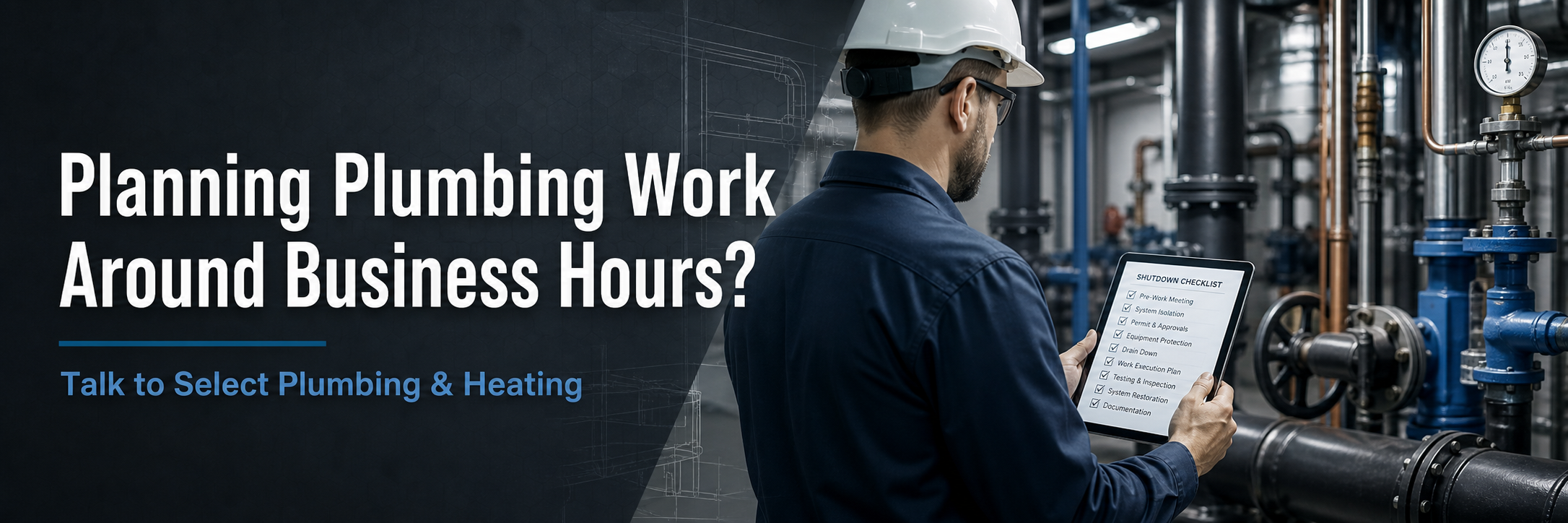
- Confirm the exact plumbing system and affected area.
- Identify valves, drains, pumps, backflow devices, meters, and connected equipment.
- Review prior leaks, pressure complaints, inspection notes, and tenant concerns.
- Notify tenants, staff, security, cleaning teams, and affected operators.
- Confirm isolation points before the shutdown window.
- Prepare floor protection, containment, access, and drain-down locations.
- Complete the repair or replacement work.
- Restore the system gradually and check pressure, fixtures, and visible joints.
- Document the work, parts replaced, observations, and future recommendations.
When To Bring In A Commercial Plumbing Contractor
If the shutdown affects multiple tenants, a mechanical room, food-service operation, medical or dental space, water meter, backflow assembly, booster pump, boiler room, or industrial piping, it should be planned with a commercial plumbing contractor. The value is not only the repair; it is the ability to reduce downtime, protect occupied areas, and restore the system properly.
Select Plumbing & Heating works with commercial and industrial properties across Mississauga and the GTA. For broad commercial plumbing planning, the best next step is to discuss the building, the affected system, and the preferred repair window before the shutdown date is set.
Useful External References
- CCOHS: Hazardous energy control programs
- Ontario Regulation 332/12: Building Code
- City of Mississauga: Building permits
FAQ
How much notice should tenants get before a commercial plumbing shutdown?
For planned work, tenants should usually receive notice as early as possible, with a reminder closer to the shutdown date. The right timing depends on the building, the type of tenant, and whether water, drainage, washrooms, kitchens, or production areas will be affected.
Can commercial plumbing work be done after business hours?
Yes, many commercial plumbing repairs can be planned outside normal business hours. The contractor still needs access, isolation points, building contacts, and enough time to restore and test the system before the building reopens.
What should be checked after the water is turned back on?
After restoration, affected fixtures, visible joints, valves, pressure gauges, hot-water service, pumps, and nearby drains should be checked. In larger buildings, it is also smart to document pressure readings and any follow-up recommendations.
