
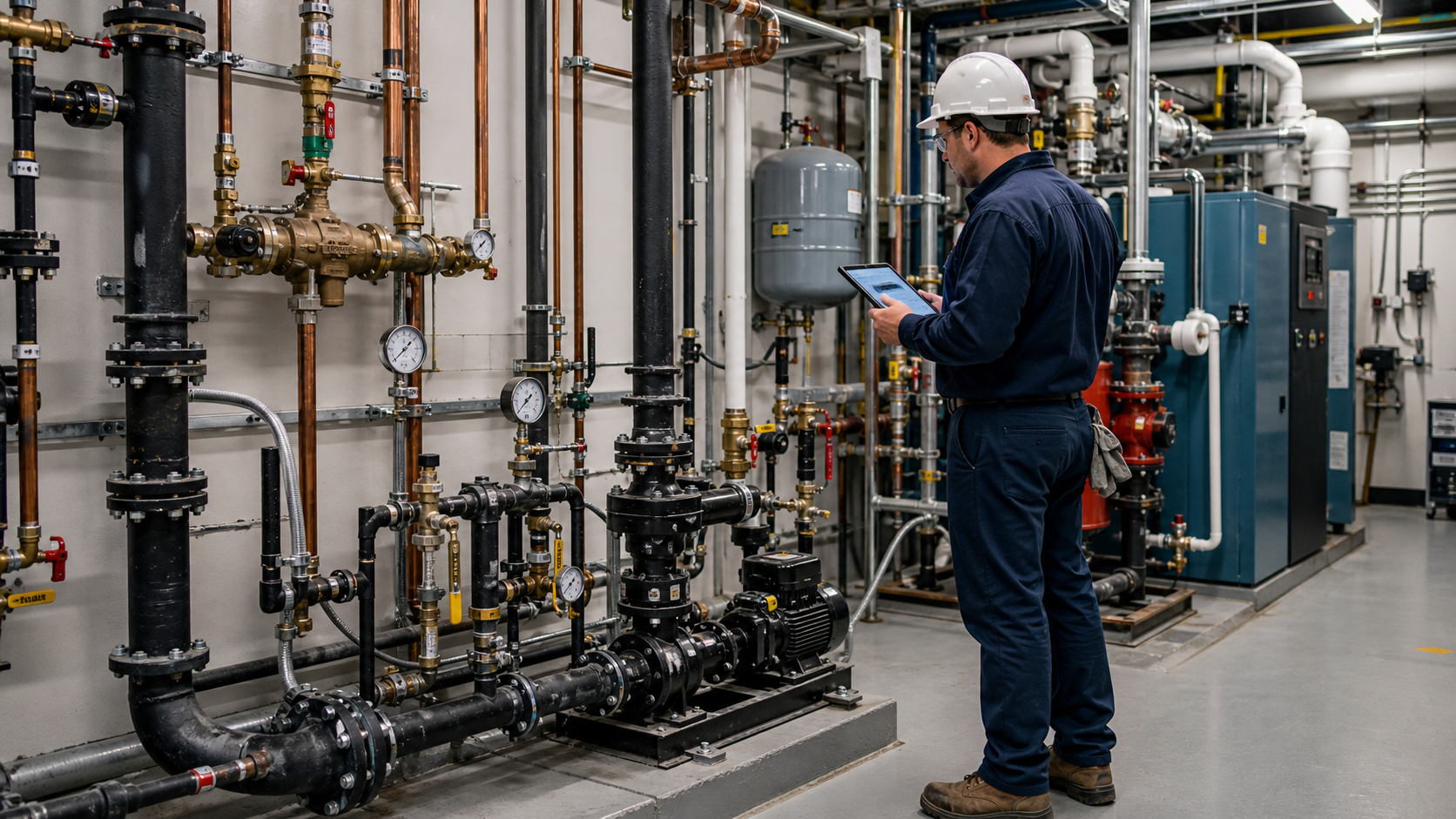
A commercial mechanical room tells you a lot about how a building is being maintained. Valves, pumps, gauges, backflow assemblies, drains, boilers, expansion tanks, and piping are all in one place, which means small issues can show up early if someone knows what to look for.
For property managers and facility teams, I treat a mechanical room checklist as a practical risk-control tool. It is not just a cleaning list or a quick visual glance. It is a way to notice leaks, pressure changes, corrosion, blocked floor drains, noisy pumps, valve problems, and documentation gaps before they turn into tenant disruption or emergency plumbing work.
Start With Valves And Isolation Points
The first thing I want to understand in a mechanical room is how the system can be isolated. Main shutoff valves, branch valves, bypass valves, backflow isolation valves, boiler loop valves, and drain-down points should be accessible, labelled, and operable. If a valve cannot be identified or turned safely, a simple repair can become a much larger shutdown.
This matters especially in buildings with multiple tenants or mixed uses. A valve serving a restaurant, clinic, office unit, warehouse washroom, or mechanical loop should not be a mystery during a leak. If the building has older piping or recurring service issues, a planned commercial pipe inspection can help connect valve locations with the systems they actually control.
Check Pumps, Noise, Vibration, And Seals
Pumps deserve more than a quick look. A facility manager should watch for unusual vibration, noise, overheating, staining, leaking seals, rust around the base, loose supports, or signs that a pump is cycling more often than expected. In commercial buildings, pumps may support domestic water pressure, hydronic heating, drainage, sump systems, circulation, or equipment loops.
Where a building has pressure complaints, slow recovery, or recurring water movement problems, pump condition should be reviewed alongside the larger plumbing system. Select Plumbing has covered this in more detail in its article on industrial pump repair in Mississauga and the GTA, which is a useful companion topic for more complex mechanical rooms.
Read Pressure Gauges And Look For Patterns
A pressure gauge is only useful if someone pays attention to what normal looks like. Facility staff should note whether gauges are readable, stable, damaged, stuck, or showing a value that does not match the building’s usual operating range. A single reading may not tell the full story, but a pattern can reveal pressure drop, overpressure, pump issues, valve restrictions, or expansion problems.
Pressure concerns should also be connected to what people in the building are experiencing. Complaints about weak fixture flow, inconsistent hot water, noisy piping, or repeated leaks can point to broader system behaviour. The existing guide on low water pressure in industrial buildings is a good example of how pressure symptoms can connect back to equipment, valves, piping, or supply conditions.
Inspect Backflow Assemblies And Cross-Connection Areas
Backflow assemblies in mechanical rooms should be visible, accessible, and protected from damage. The inspection should look for leaks, corrosion, missing tags, poor clearance, closed or partially closed valves, discharge concerns, and any nearby changes that could make testing or service harder.
For commercial properties, backflow is not just another fitting on the wall. It protects the potable water system from potential contamination caused by pressure changes or cross-connections. If the property has a testable assembly, the building team should keep clear records and know who is responsible for annual testing or repairs. When service is needed, the relevant page is backflow preventer installation, testing, and repair.
Do Not Ignore Floor Drains And Drainage
A mechanical room floor drain is easy to overlook until it fails. During a checklist review, I would check whether the drain is clear, accessible, odour-free, and positioned to handle expected discharge or minor water release. Standing water, staining, sewer smell, mineral deposits, or blocked grates should be treated as warning signs.
Drainage issues in a mechanical room can become expensive because they often sit near boilers, pumps, electrical controls, stored materials, or tenant-critical systems. If there are recurring drain concerns, a drain and sewer camera inspection may help confirm whether the problem is local to the room or part of a larger building drainage issue.
Review Boilers, Hydronic Equipment, And Expansion Tanks
Where the mechanical room includes boiler or hydronic equipment, the plumbing checklist should include visible leaks, corrosion, pressure relief discharge, expansion tank condition, pipe supports, isolation valves, make-up water, and evidence of repeated repairs. This is not a substitute for licensed boiler or heating service, but it helps facility teams notice when something deserves professional attention.
Mechanical rooms with heating equipment may connect to several Select Plumbing service areas, including boiler repair and installation in Mississauga, hydronic heating installation, and expansion tank installation. If the equipment involves pressure vessels or regulated boiler systems, Ontario owners and operators should also be aware of the Technical Standards and Safety Authority’s role in boiler and pressure vessel safety.
Look At Piping, Supports, Corrosion, And Labelling
Commercial mechanical rooms often contain multiple piping materials and systems in a tight space. Copper, steel, stainless steel, gas piping, hydronic lines, drains, vents, and compressed air piping may all be present depending on the building. A practical checklist should look for corrosion, staining, poor supports, vibration, missing labels, unprotected penetrations, and signs that previous repairs were patched rather than solved.
For industrial or higher-demand properties, this overlaps with broader maintenance planning. The article on industrial piping maintenance checks is worth reviewing if the mechanical room supports production, warehouse operations, process equipment, or heavy daily water use.
Keep Records That Make The Next Repair Easier
A checklist is most useful when it becomes part of the building record. At minimum, facility teams should keep notes on valve locations, equipment names, observed issues, pressure readings, leak history, repair dates, contractor recommendations, and photos of problem areas. This helps the next technician understand what changed and helps the property manager prioritize work before budget season or tenant complaints force the issue.
Good records also reduce confusion during after-hours calls. If a night security team or on-call manager knows where the main isolation points are, the building can respond faster while waiting for a commercial plumber.
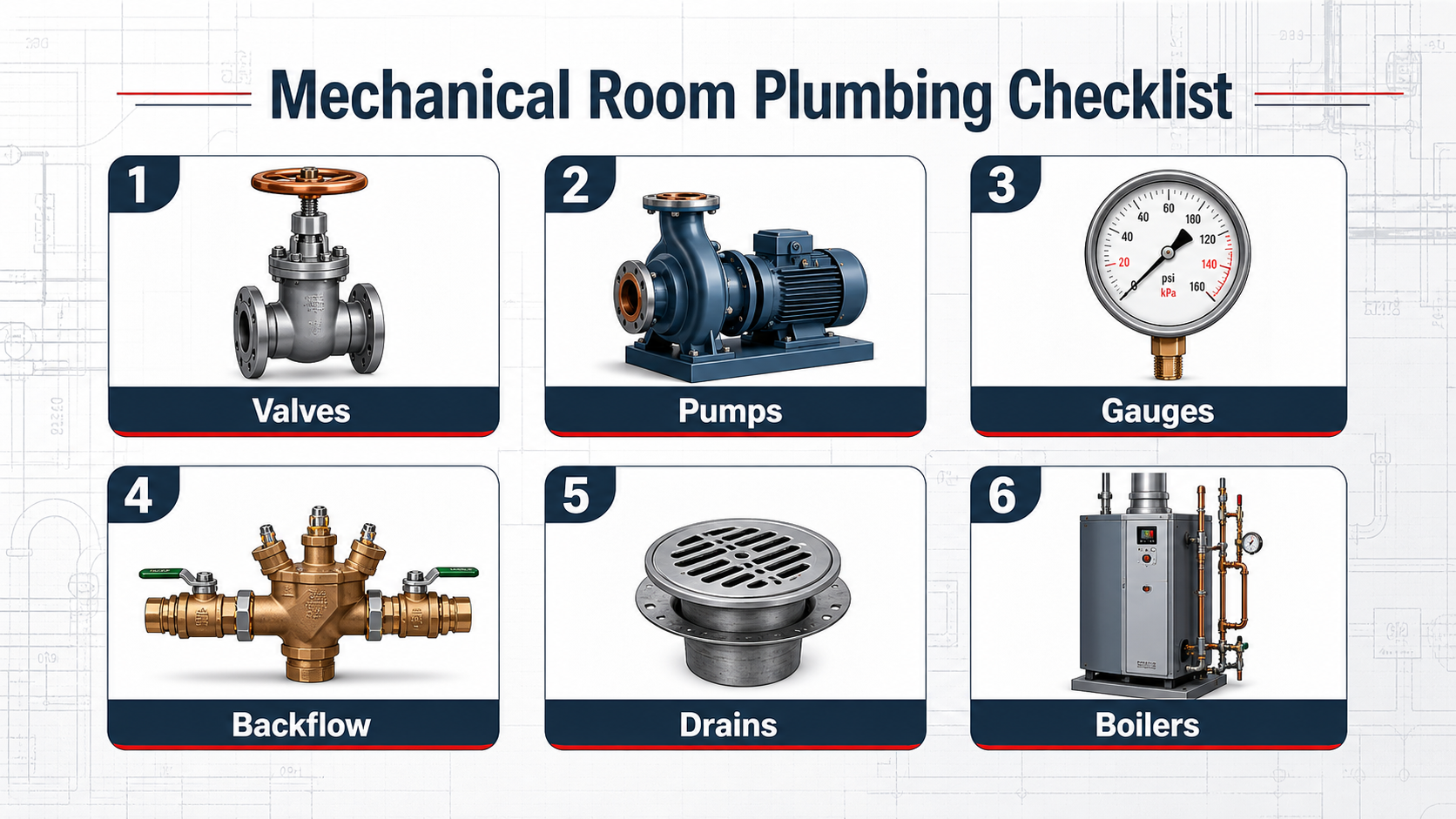
Mechanical Room Plumbing Checklist
- Confirm main and branch shutoff valves are accessible and labelled.
- Check pumps for leaks, noise, vibration, heat, staining, and unstable operation.
- Review pressure gauges and compare readings with normal building conditions.
- Inspect backflow assemblies for access, tags, leaks, corrosion, and clearance.
- Check floor drains for blockage, odour, standing water, staining, or poor access.
- Look over boilers, hydronic piping, expansion tanks, relief discharge, and make-up water.
- Inspect piping for corrosion, poor supports, vibration, staining, and undocumented repairs.
- Photograph issues and update the building’s maintenance record.
- Flag anything that needs licensed plumbing, heating, gas, or safety review.
When A Mechanical Room Review Should Be Professional
A basic visual checklist can be handled by trained facility staff, but a professional review makes sense when the building has recurring leaks, pressure problems, boiler-room concerns, pump failures, backflow issues, floor-drain odours, unexplained water use, or planned tenant improvements. It is also smart before major repairs, lease turnover, insurance reviews, or capital planning.
Select Plumbing & Heating works with commercial and industrial properties across Mississauga and the GTA. If the mechanical room supports multiple tenants, sensitive operations, restaurants, clinics, warehouses, or production areas, a structured review can help identify plumbing risks before they become expensive disruptions.
Useful External References
- CCOHS: Hazardous energy control programs
- Ontario Regulation 332/12: Building Code
- TSSA: Boilers, pressure vessels, and operating engineers
FAQ
How often should a commercial mechanical room be checked?
High-use commercial and industrial buildings should review mechanical-room plumbing regularly, with more detailed checks before planned repairs, seasonal changes, lease turnover, or recurring complaints. The right frequency depends on system age, building use, equipment complexity, and previous repair history.
What should a property manager look for first?
Start with visible leaks, valve access, pump condition, pressure readings, floor drains, backflow assemblies, and any signs of corrosion or staining. These are practical indicators that the room may need deeper plumbing review.
Is a mechanical room checklist the same as a code inspection?
No. A checklist helps facility teams notice maintenance risks and organize observations. It does not replace required inspections, permits, licensed trade work, or regulatory review where those apply.
